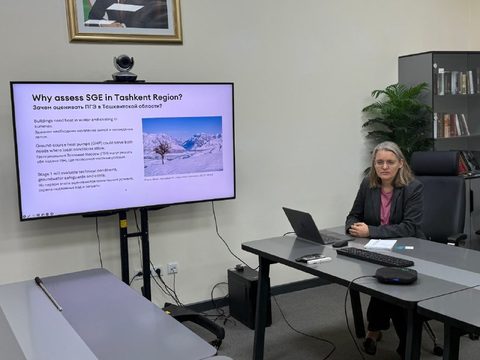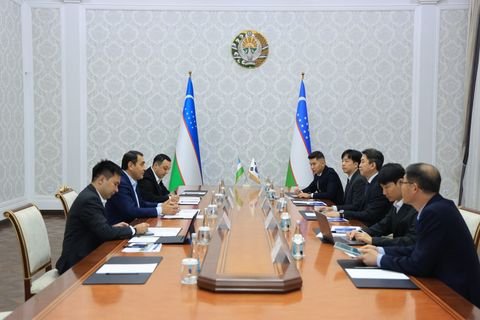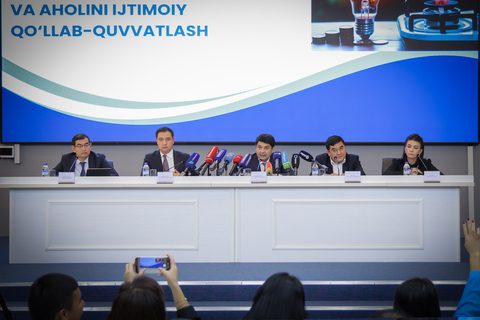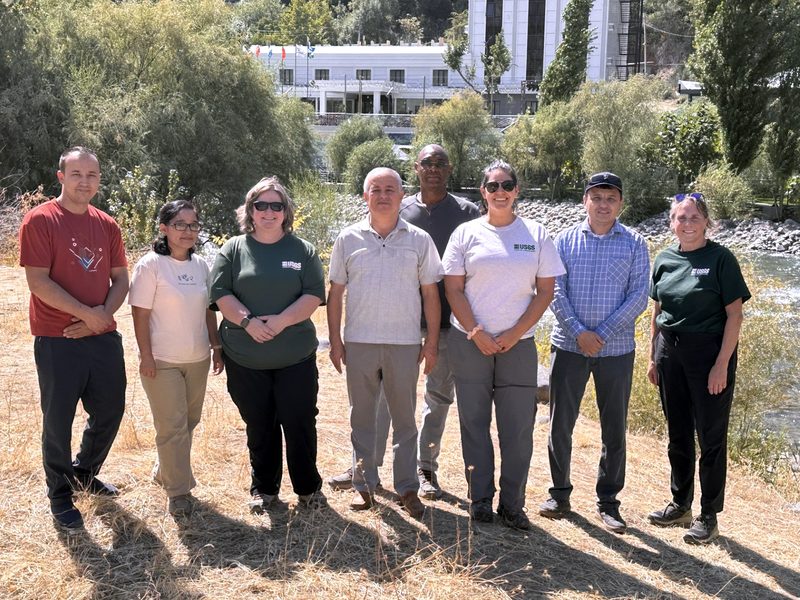
In September 2025, Kristina Masterson, a supervisory hydrologist at the U.S. Geological Survey (USGS) New York Water Science Center, and Monica Langhorst and Cassi Crow of its Oklahoma-Texas Water Science Center met Uzhydromet’s Hydrometeorological Research Institute in Tashkent to launch a joint study, the USGS reported on 9 December 2025.
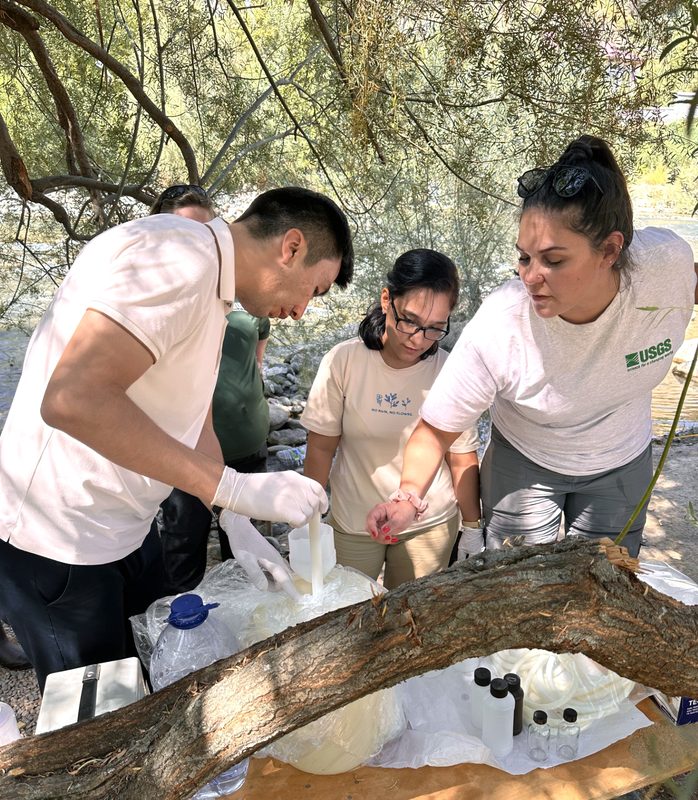
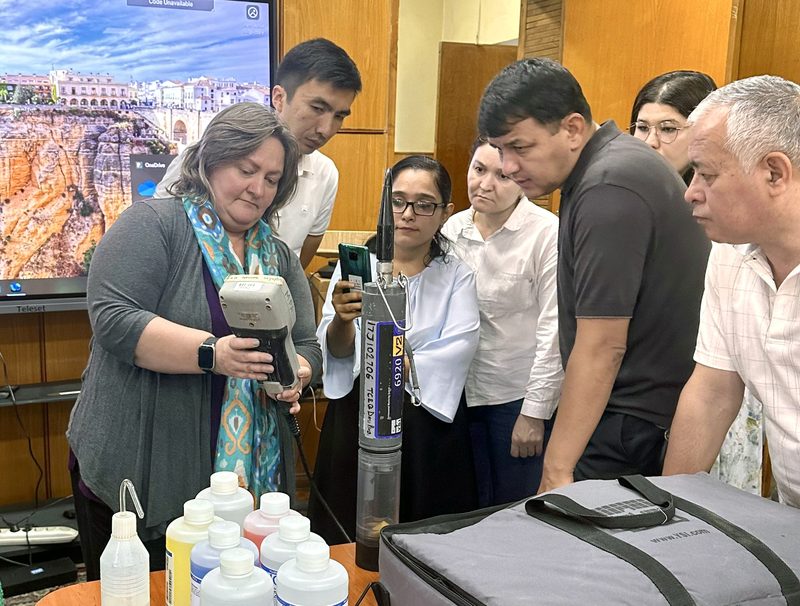
The study traces the sources of the Kashkadarya River’s water, in the Amu Darya basin, and how they change through the seasons, using stable isotopes of oxygen and hydrogen. For one year, river samples are to be taken each season at several places and analysed for deuterium and oxygen-18, major ions, trace elements and nutrients, with water measurements in the field. Selected samples are to be analysed in both the institute’s and USGS laboratories to confirm the results.
The September meetings, in the office and in the field, covered the sampling plan, the choice of sampling sites and training in field practice and river sampling. They were the first of several bilateral meetings on capacity building and the exchange of science and technology. The U.S. State Department funds the study.
Isotope tracers help to separate the sources of river water, such as snowmelt and groundwater baseflow, and processes such as evaporation. The data are meant to help assess how changing hydrological conditions could affect the water available, and to inform water management in Uzbekistan.
Why it matters
Stable isotopes of hydrogen and oxygen show where groundwater and thermal water were recharged and how waters mix. Values for rivers and rain in Uzbekistan’s basins are the reference against which thermal waters are read, together with the local meteoric water lines that the institute’s researchers published in 2026. The study also builds the means to measure these isotopes in Uzbekistan.