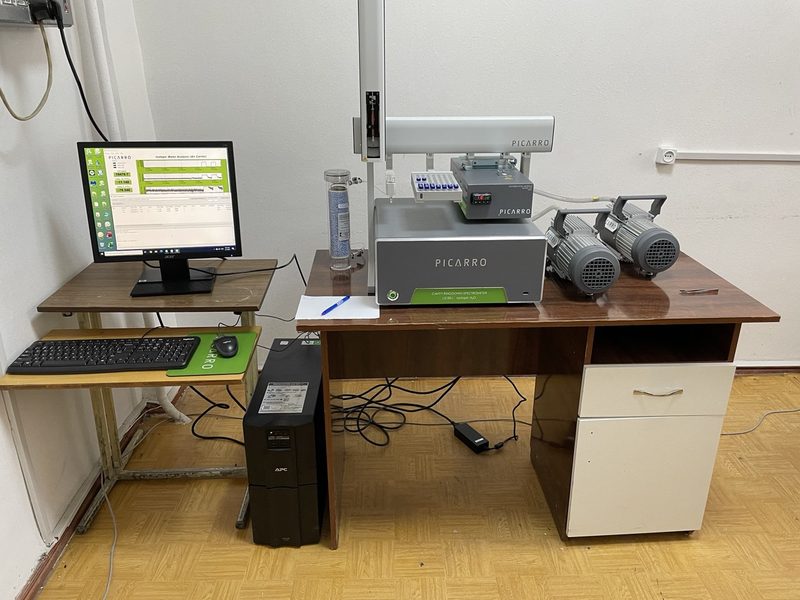
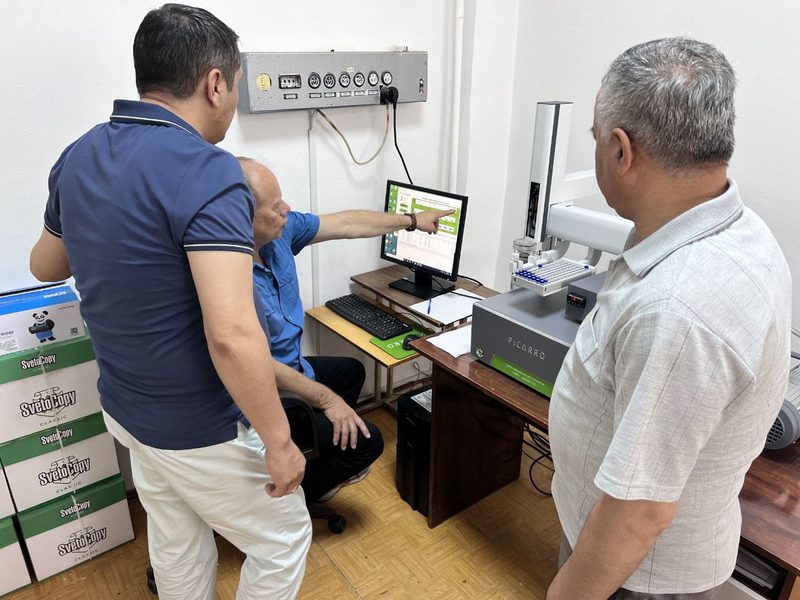
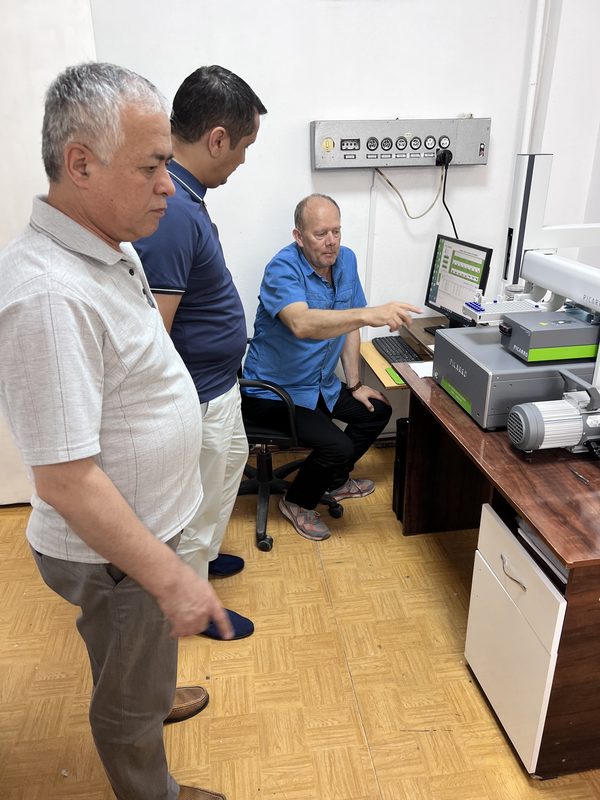
Uzhydromet’s Hydrometeorological Research Institute in Tashkent has set up a Water Quality and Stable Isotopes Laboratory, the first laboratory in the country for stable isotope research and isotope hydrology. It was created in 2025 under two projects: UZB7001 of the International Atomic Energy Agency (IAEA) technical cooperation programme for 2024–2025, on establishing a stable isotope laboratory to monitor water resources and pollution sources, and an applied research project of the Agency for Innovative Development under the Ministry of Higher Education, Science and Innovation (IZ-2020113030, May 2022 to April 2025) to create software for monitoring water resources and their pollution with stable isotopes.
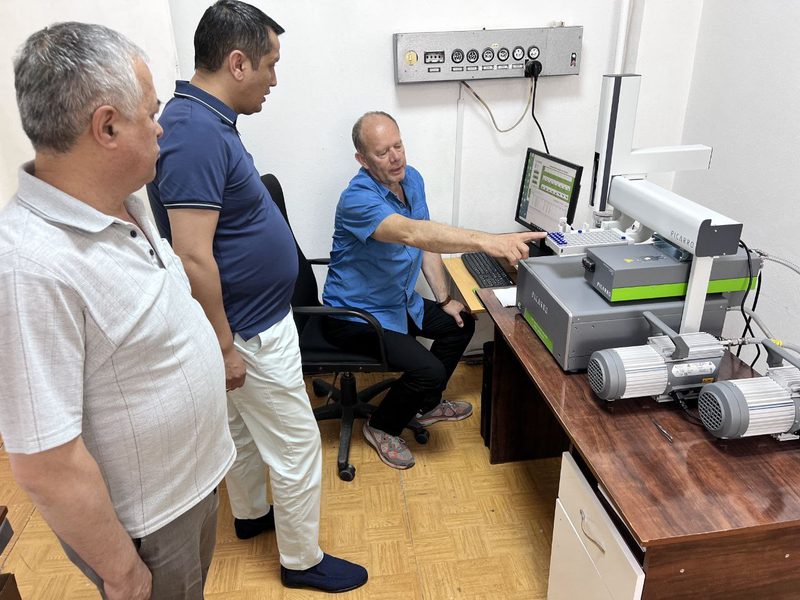
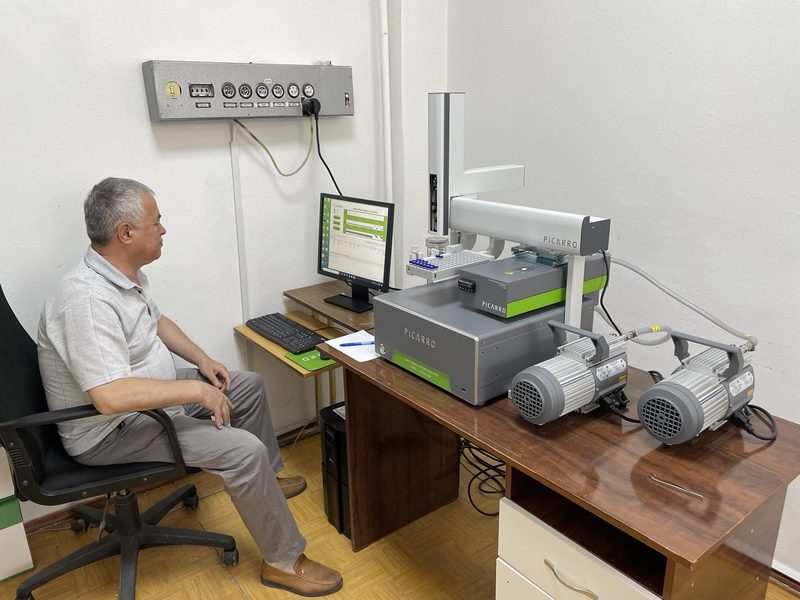
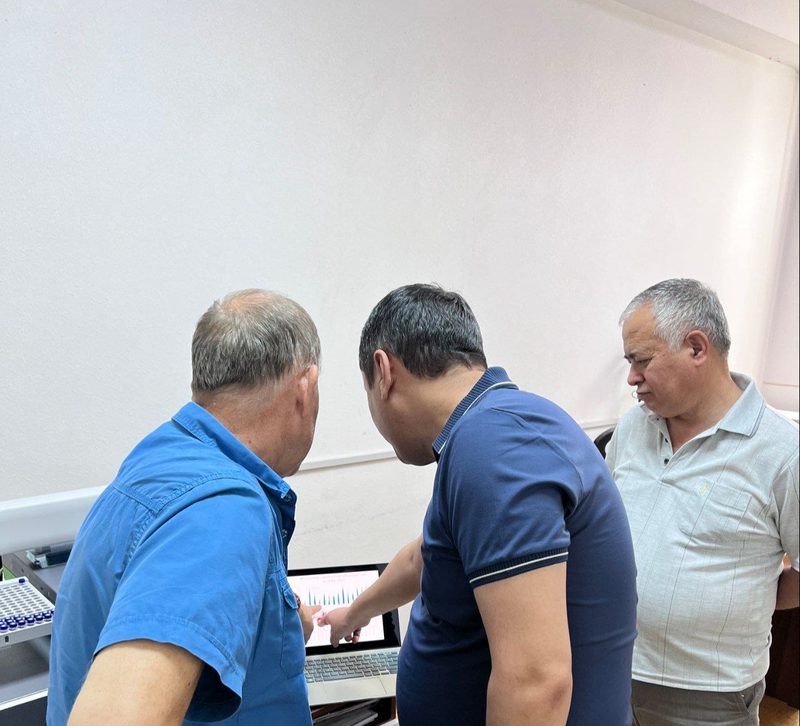
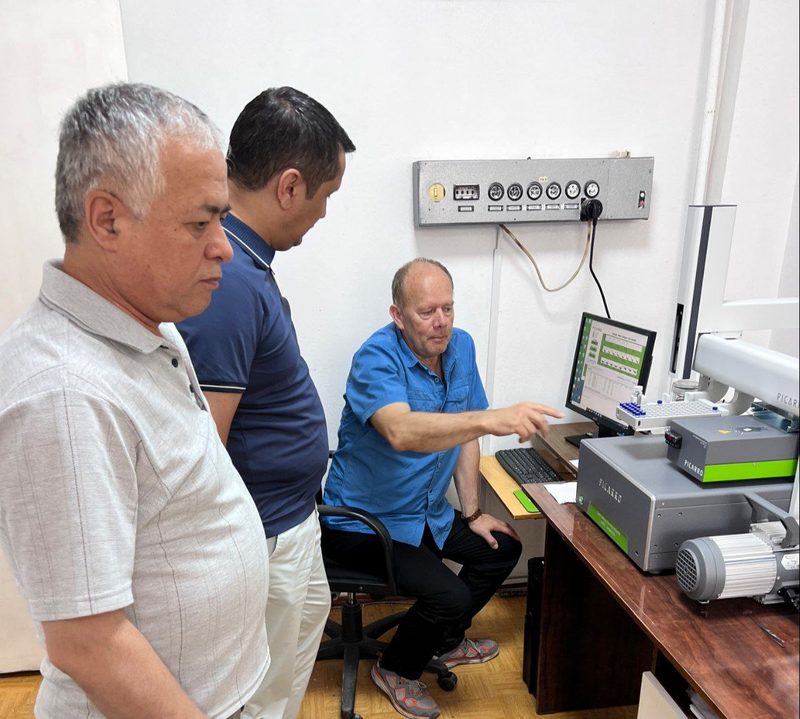
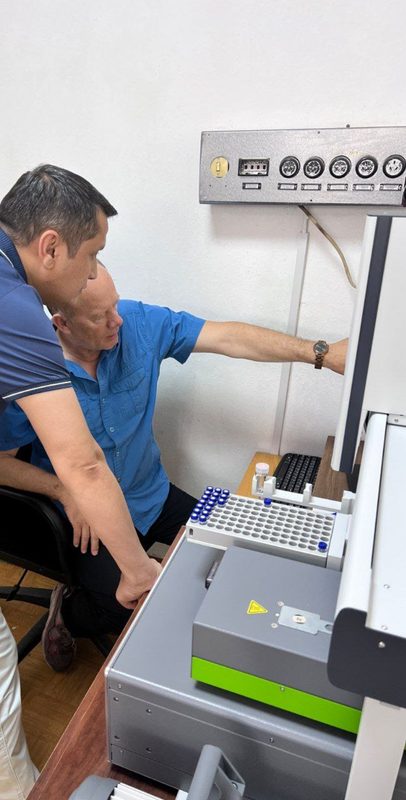
The laboratory’s Picarro L2130-i laser spectroscopic analyser, the only one in Uzbekistan, measures the isotopes of oxygen and hydrogen (δ¹⁸O and δ²H) in samples of precipitation, river water, ice and snow with high precision. From 31 May to 7 June 2025, Ladislav Holko, a leading researcher at the Institute of Hydrology of the Slovak Academy of Sciences, installed and started the analyser as an IAEA expert, together with Bakhriddin Nishonov, a candidate of technical sciences who leads the projects, and the laboratory’s staff.
The analyses are to show how much glaciers, rain and snow contribute to the flow of Uzbekistan’s rivers, where moist air masses come from and how surface water and groundwater interact, for managing water resources as the climate changes. Under the Agency for Innovative Development project, the institute and Uzhydromet set up six stations of the Global Network of Isotopes in Precipitation (GNIP) and three of the Global Network of Isotopes in Rivers (GNIR), which the World Meteorological Organization and the IAEA run, and the GNIP stations received Palmex precipitation samplers obtained through IAEA projects. The laboratory also has a spectrophotometer, a conductivity meter and a pH meter for water quality, and an automatic gauge of water level and flow was installed at a hydrological post. The projects also include field sampling of precipitation and river water, training, and stays abroad for young specialists.
Why it matters
Geothermal studies read the same two isotopes to tell where and at what height thermal water was recharged, how it mixes with shallow groundwater on its way up and whether it has exchanged oxygen with hot rock. A laboratory in the country can now measure them, and the six GNIP stations give the precipitation values that thermal waters are compared with: their first results have already given local meteoric water lines for Uzbekistan.