Journal articleFree to read
Impact of climate change on the groundwater levels in the Sox river plain
Иқлим ўзгаришининг Сўх ёйилмаси ер ости сувлари сатҳига таъсири
- Namangan State University, Namangan, Uzbekistan
Highlights
- Kokand weather station, 1961–1990 against 1991–2020: mean annual air temperature 14.0 °C and 14.43 °C; annual precipitation 114.58 mm and 131.59 mm.
- Sokh River at Sarikanda: mean annual flow 43.61 m³/s and 51.00 m³/s; summer flow 112.21 m³/s and 129.15 m³/s.
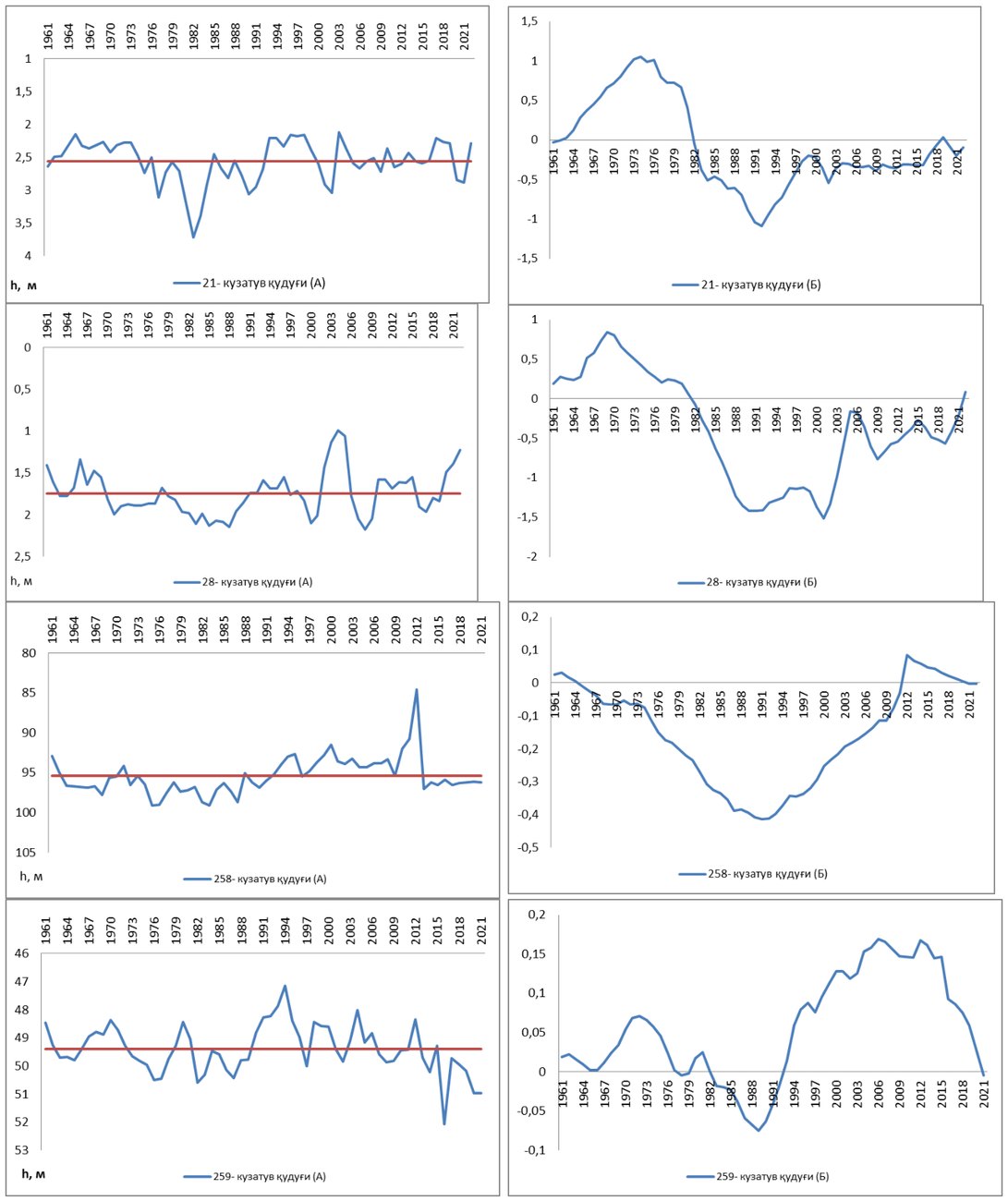
- Mean annual depth to groundwater, 1961–1990 against 1991–2020: well 21, 2.64 m and 2.51 m; well 28, 1.83 m and 1.69 m.
- Well 258: 96.71 m and 94.16 m; well 259: 49.50 m and 49.25 m.
Keywords
- climate change
- Sokh alluvial plain
- groundwater
- air temperature
- precipitation amount
- river discharge
- baseline climate period
- current climate period
- assessment
Summary
The author compares the baseline climate period 1961–1990 with 1991–2020 at the Kokand weather station and on the Sokh River at Sarikanda. Mean annual air temperature rose by 0.43 °C to 14.43 °C, most in winter (0.68 °C); annual precipitation rose from 114.58 mm to 131.59 mm; and mean annual flow of the Sokh rose by 7.38 m³/s to 51.00 m³/s, most in summer.
Mean depth to groundwater in four observation wells fell between the two periods, meaning the water table rose: by 0.13 m in well 21, 0.14 m in well 28, 2.55 m in well 258 and 0.25 m in well 259. The author relates the rise to warming, more precipitation and higher river flow. On the upper right bank of the fan the water table rose in 1990–2012 and has fallen since 2013, which the author links to groundwater use.
The author recommends that groundwater monitoring on the fan take account of changes in air temperature, precipitation and river flow.
Figures (1)
How to cite
I. R. Soliyev (2025). Impact of climate change on the groundwater levels in the Sox river plain. Gidrometeorologiya va atrof-muhit monitoringi (Hydrometeorology and Environmental Monitoring), 2025, No. 1, pp. 59–69. https://nigmi.uz/portfolio/hydrometeorology-and-environmental-monitoring-scientific-journal-%e2%84%96-1-2025-y/