Journal articleOpen access
Structural-tectonic features and oil and gas potential of the Cretaceous deposits of the Bukhara-Khiva region
Структурно-тектонические особенности и перспективы нефтегазоносности меловых отложений Бухаро-Хивинского региона
https://doi.org/10.70769/3030-3214.SRT.4.3-1.2026.6
Highlights
- Sedimentary cover 2,500–4,500 m thick and more; Cretaceous deposits 500–1,800 m thick.
- Eight permeable horizons in the Cretaceous section, from VII (Senonian) to XIV (Neocomian).
- Formation water from horizons XII and XIV at the Buzakhur area: weak chloride–calcium brines of 98.8–114.6 g/L.
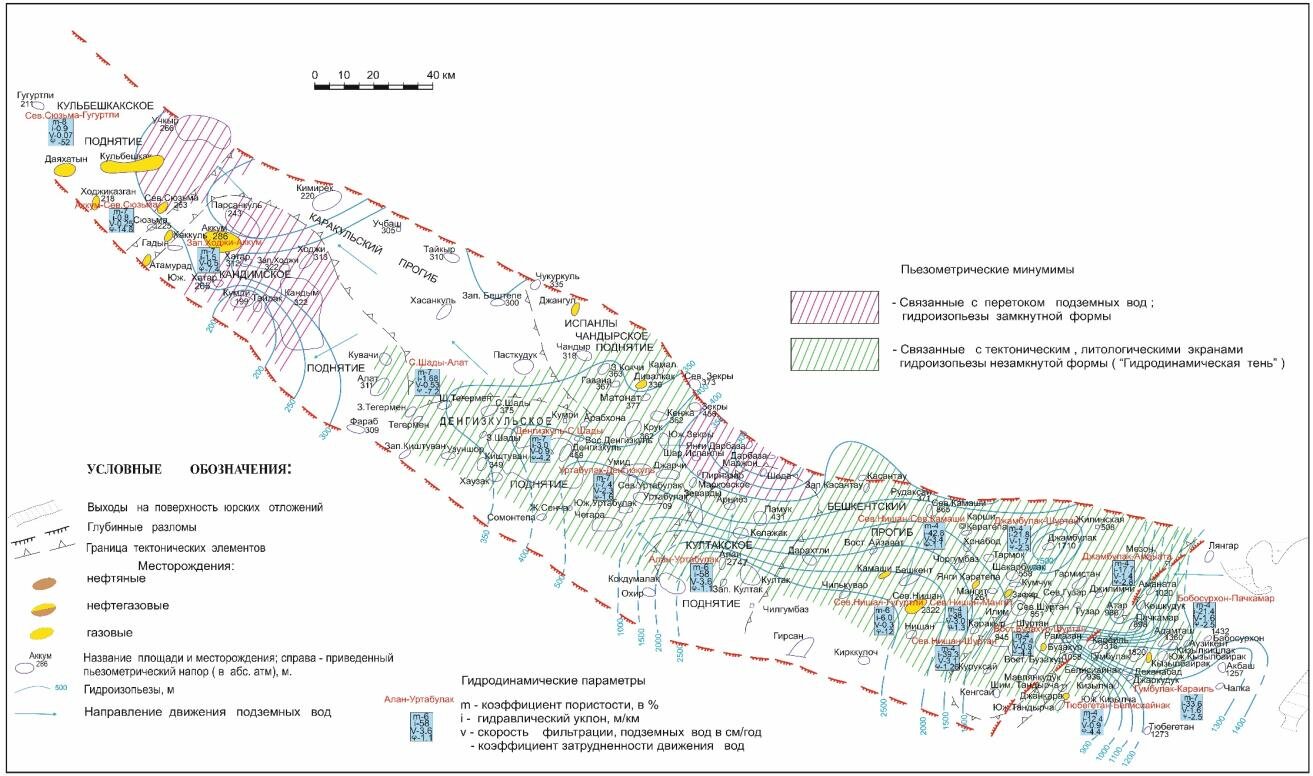
- Reduced heads in the Lower Cretaceous drop from 2,747 m at the Alan field to 709 m at North Urtabulak and 431 m at Pamuk.
- Between Alan and North Urtabulak: hydraulic gradient 58 m/km, filtration rate 3.6 cm per year; between North Syuzma and Gugurtli: 0.5 m/km and 0.07 cm per year.
Abstract
This article examines the oil and gas potential of the Cretaceous deposits of the Bukhara-Khiva oil and gas region, with particular emphasis on the Chardzhou Step. A comprehensive analysis of geological and geophysical data, drilling results, and the hydrodynamic conditions of groundwater within the Cretaceous deposits was conducted. The study identifies prospective areas associated with tectonic, lithological, and hydrodynamic seals that may control the accumulation and preservation of hydrocarbons. The structural and tectonic framework of the Cretaceous succession, the distribution of productive horizons, groundwater flow directions, hydraulic gradients, and filtration velocities were analyzed. Local areas characterized by favorable hydrodynamic conditions for hydrocarbon accumulation and preservation were identified. The results demonstrate the significant potential for expanding prospective areas within the Cretaceous deposits of the Chardzhou Step and emphasize the need for targeted geological exploration in insufficiently studied areas of the region.
English abstract from the journal’s website. The authors’ abstract, reproduced under CC BY 4.0.
Keywords
- Bukhara-Khiva region
- Chardzhou Step
- Cretaceous deposits
- oil and gas potential
- structural-tectonic framework
- hydrodynamic conditions
- hydraulic gradient
- filtration
In plain English
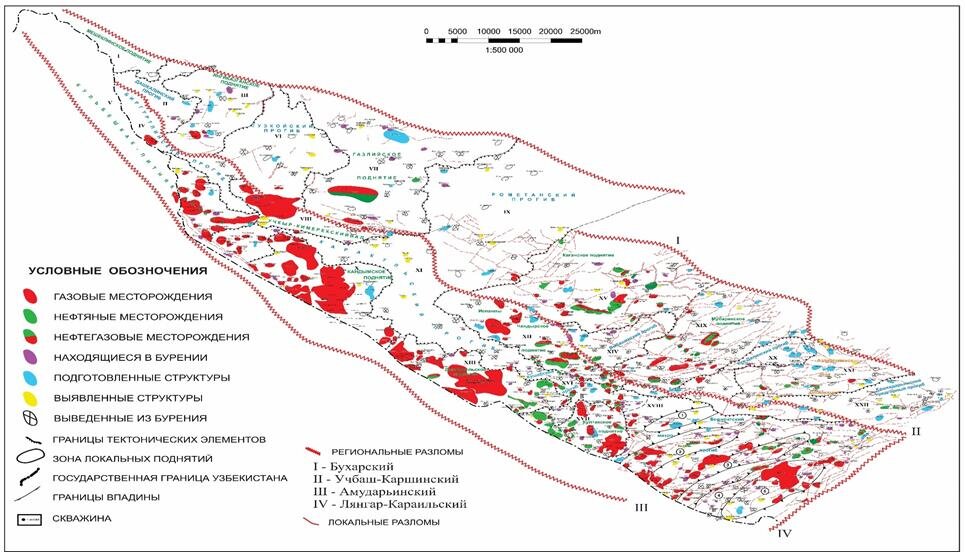
Written for oil and gas exploration, this paper reviews the Cretaceous rocks of the Bukhara–Khiva region, part of the Amu Darya basin between the South Kyzylkum and Amu Darya regional faults. It focuses on the Chardzhou step, one of the region’s two tectonic steps alongside the Bukhara step.
The sedimentary cover is 2,500–4,500 m thick and more. The Cretaceous section, 500–1,800 m thick, holds eight permeable horizons, numbered VII to XIV, mostly sandstones, separated by impermeable clays.
The authors mapped the pressure heads of formation water in the Lower Cretaceous aquifer complex of the Chardzhou step. Water moves mainly from the south and south-east towards the north and north-west. Westwards, heads, hydraulic gradients and filtration rates fall steadily. Closed and open lows in the head surface mark zones that the authors see as favourable for gas and oil to collect.
Figures (2)
How to cite
T. Kh. Shoimurotov, A. Zh. Khojiev, F. O. Juraev and Sh. Sh. Akhmedov (2026). Structural-tectonic features and oil and gas potential of the Cretaceous deposits of the Bukhara-Khiva region. Sanoatda raqamli texnologiyalar (Digital Technologies in Industry), 4(3-1). https://doi.org/10.70769/3030-3214.SRT.4.3-1.2026.6