Journal articleFree to read
Towards the selection of wells for hydrogeochemical monitoring in earthquake forecasting
К выбору объектов гидрогеохимического мониторинга для прогноза землетрясений
- Institute of Seismology, Academy of Sciences of the Republic of Uzbekistan, Uzbekistan
Highlights
- Suitable wells: self-flowing artesian, deeper than 900 m, constant flow and temperature, not used for supply, with pressure, temperature and weather recorded.
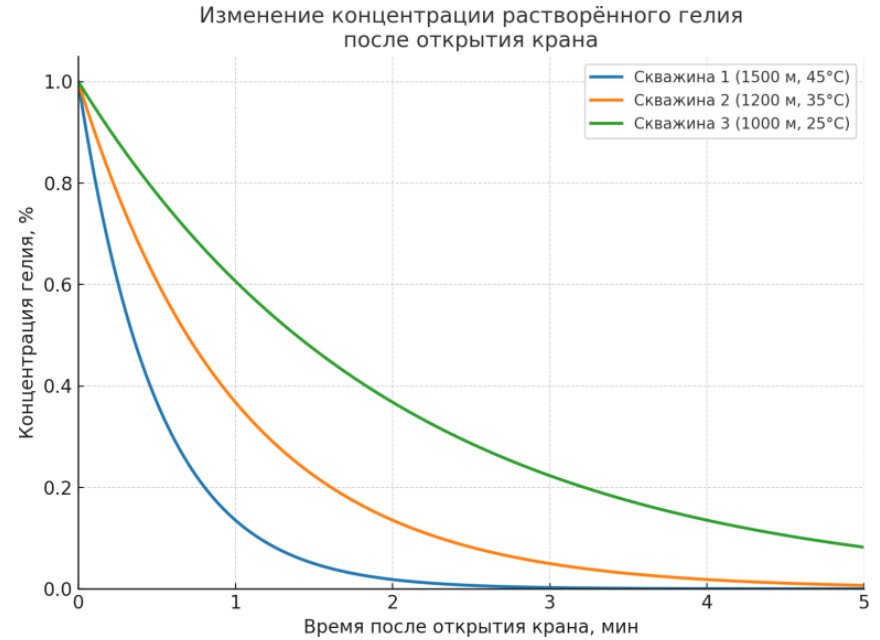
- Modelled wells: 1,500 m and 45 °C; 1,200 m and 35 °C; 1,000 m and 25 °C.
- Dissolved helium falls by 90% within the first 5 minutes after a tap is opened.
- Well F-4 (Faizabad): wellhead back-pressure of no more than 200 mm of water cut helium variations 2–3 times.
- Nine complex stations on the Tashkent, Fergana, Samarkand and Central Kyzylkum test sites.
Keywords
- hydrogeochemical monitoring
- self-flowing wells
- dissolved helium
- degassing
- thermal waters
- earthquake forecasting
Summary
T. L. Ibragimova, of the Institute of Seismology of the Academy of Sciences of Uzbekistan, sets out criteria for choosing wells and springs for hydrogeochemical monitoring aimed at earthquake forecasting. The method goes back to work in Tashkent before the 1966 earthquake, when the radon concentration in thermomineral water rose almost 5 times. Much of the present observation network in Uzbekistan uses wells run through valves (the “tap” regime) or shallow wells, which she links to false alarms and missed events.
Her criteria are: a self-flowing artesian well; depth greater than 900 m; constant flow and temperature; no use of the water for supply; and recording of pressure, temperature and weather alongside the chemistry. Spontaneous degassing, typical of almost all self-flowing wells and thermal-water springs, makes the gas–water mixture sensitive to small changes in outflow. At well F-4 (Faizabad) a new wellhead raised the pressure by no more than 200 mm of water and cut the amplitude of helium variations by 2–3 times; similar effects were found at the Issyk-Ata thermal water field in Kyrgyzstan. At the Ganchi well of the Fergana test site, a 4.5 cm rise in water level in early June 1981 followed 60–70 mm of rain on 30–31 May 1981.
Hydrogeochemical observations for earthquake forecasting in Uzbekistan run at nine complex stations on the Tashkent, Fergana, Samarkand and Central Kyzylkum test sites; their main target is confined groundwater in Mesozoic and Cenozoic rocks. Most deep wells now work in the tap regime. A model based on degassing kinetics and Henry's law, run for three wells (1,500 m and 45 °C, 1,200 m and 35 °C, 1,000 m and 25 °C), shows dissolved helium falling by 90% from its initial value within the first 5 minutes after a tap is opened, producing variations unrelated to seismic processes. She recommends auditing the network and excluding or re-equipping wells with a disturbed regime.
Figures (1)
How to cite
T. L. Ibragimova (2025). Towards the selection of wells for hydrogeochemical monitoring in earthquake forecasting. Seysmologiya muammolari (Problems of Seismology), vol. 7, No. 2, 2025, pp. 29–34. https://seismos.uz/uploads/pdf/journal/%D0%A1%D0%B5%D0%B9%D1%81%D0%BC%D0%BE%D0%BB%D0%BE%D0%B3%D0%B8%D1%8F%20%D0%BC%D1%83%D0%B0%D0%BC%D0%BC%D0%BE%D0%BB%D0%B0%D1%80%D0%B8%202025%20%E2%84%962.pdf