Journal article (review)Open access
Heat Pumps as a Key Driver of a Low-Carbon Future. Part 1. Historical Evolution and Development Prospects in Uzbekistan
https://doi.org/10.67846/jcet.2026.42113
Highlights
- The coefficient of performance (COP) of heat pumps has more than doubled over the period reviewed.
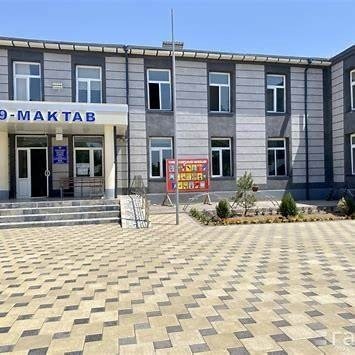
- School No. 19 in Bayavut, Syrdarya region, is heated by three heat pumps with a total of 340 kW.
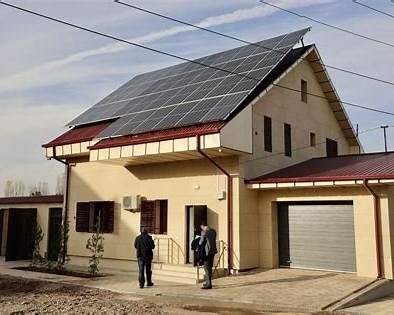
- A “Near Zero Energy” demonstration house in Nurafshan, Tashkent region, uses a heat pump for heating and cooling, with a 16 kW solar power plant and solar collectors on the roof.
- Proposed pathways for Uzbekistan: hybrid heat pump and gas boiler systems, solar-assisted heat pumps, geothermal installations and low-grade heat recovery.
Abstract
This paper presents a scientific and analytical review of the evolution of heat pump (HP) technology as a key solution for energy-efficient, low-carbon heat supply. The prerequisites and main stages of heat pump development are examined, along with the drivers of their current rapid deployment, including decarbonization, electrification of heating, and market growth. A generalized periodization of research and practical implementation (pre-1990s; 1990–2010; 2010–2024) is applied, reflecting changes in scientific priorities and deployment scales. Heat pumps are classified according to their operating principle and the type of low-temperature heat source (air, ground, water, etc.), and the main application areas are systematized: residential and public buildings, industry and energy systems, and agriculture. Key scientific and technological achievements are summarized, including more than a twofold increase in the coefficient of performance (COP), advances in compressor and heat-exchanger technologies, the transition to natural and low-GWP refrigerants, and progress in automation and exergoeconomic analysis. Particular attention is paid to Uzbekistan, where barriers to large-scale HP deployment are analyzed and promising development pathways are proposed, such as hybrid “HP + gas boiler” systems, solar-assisted heat pump complexes, geothermal installations, and low-grade heat recovery projects. The generalizations obtained in this study can be used as a scientific and analytical basis for the strategic planning of the development of heat pump technologies in Uzbekistan.
The authors’ abstract, reproduced under CC BY 4.0.
Keywords
- heat pump
- decarbonization of heat supply
- COP
- geothermal heat pumps
- hybrid heating systems
- solar-assisted heat pumps
- Uzbekistan
In plain English
This review traces how heat pumps developed, in three periods from before the 1990s to 2024, and sorts them by how they work, by their heat source (air, ground, water and others) and by where they are used: homes and public buildings, industry and energy systems, and agriculture.
For Uzbekistan, the authors look at what holds back large-scale use of heat pumps and propose ways forward, including geothermal installations. They describe recent Uzbek examples, such as a school in Syrdarya region heated by heat pumps.
Figures (3)
How to cite
Nilufar Avezova, G‘ulomjon Uzoqov, Akmal Kuchkarov, Bekzod Abdukarimov, Abdumalik Xalikov, Elvira Oshepkova, Malika Shermatova, Erkin Kholmatov and Asror Ergashev (2026). Heat Pumps as a Key Driver of a Low-Carbon Future. Part 1. Historical Evolution and Development Prospects in Uzbekistan. Journal of Construction and Engineering Technology, 4(2), 1–20. https://doi.org/10.67846/jcet.2026.42113