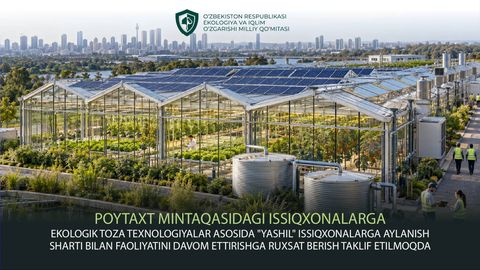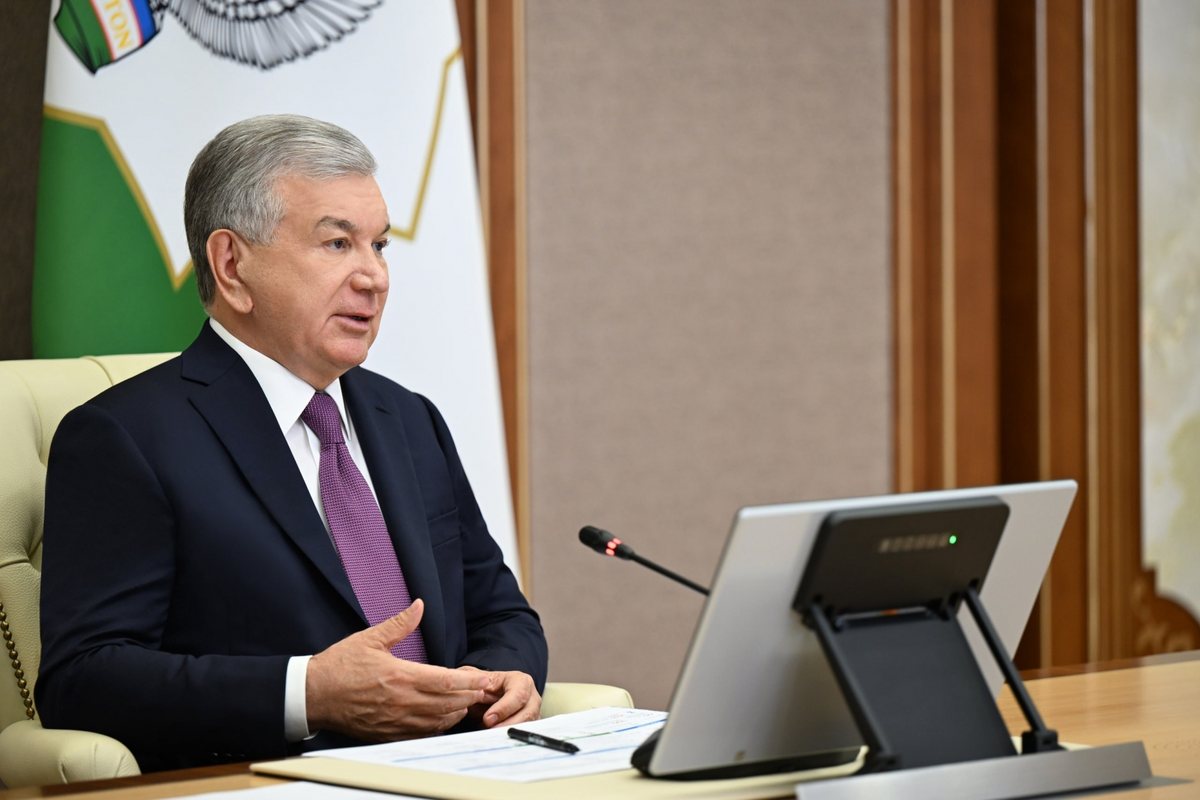
On 13 October 2026, President Shavkat Mirziyoyev reviewed a presentation on bringing “green” technologies into greenhouses and keeping them environmentally safe. It proposes a special environmental regime for greenhouses in Tashkent city and the five districts next to it.
Greenhouses would be allowed to heat with natural gas, electricity, geothermal and solar energy, and secondary heat from thermal power plants. Burning tyres, plastic, bitumen, fuel oil, used oil and waste would not be allowed.
Greenhouses running on solid fuel would have to switch to these sources by 1 December 2026. Solid fuel could stay only where a greenhouse meets strict technical requirements: covered fuel storage, automated boilers, effective dust and gas cleaning, safe collection of ash and slag, a backup generator and a chimney of the minimum height.
From 15 October 2026 to 15 March 2027 the greenhouses would be monitored continuously. Data from measuring instruments and video cameras would go in real time to the Ecology Committee’s information system, and drones and public inspectors would also take part. Greenhouses without dust and gas cleaning, with emissions above the limits or using banned fuel would face penalties and, where necessary, suspension.
To help greenhouses adapt, the proposals include subsidies of up to 50 million soums per hectare for environmental and energy-saving equipment, preferential loans of up to 3 billion soums for seven years, and help with the cost of buying and installing monitoring equipment.
Why it matters
If adopted, the regime would make geothermal energy one of a few permitted ways to heat greenhouses around the capital. A presidential resolution signed the same day already supports greenhouses that heat with geothermal systems or heat pumps.