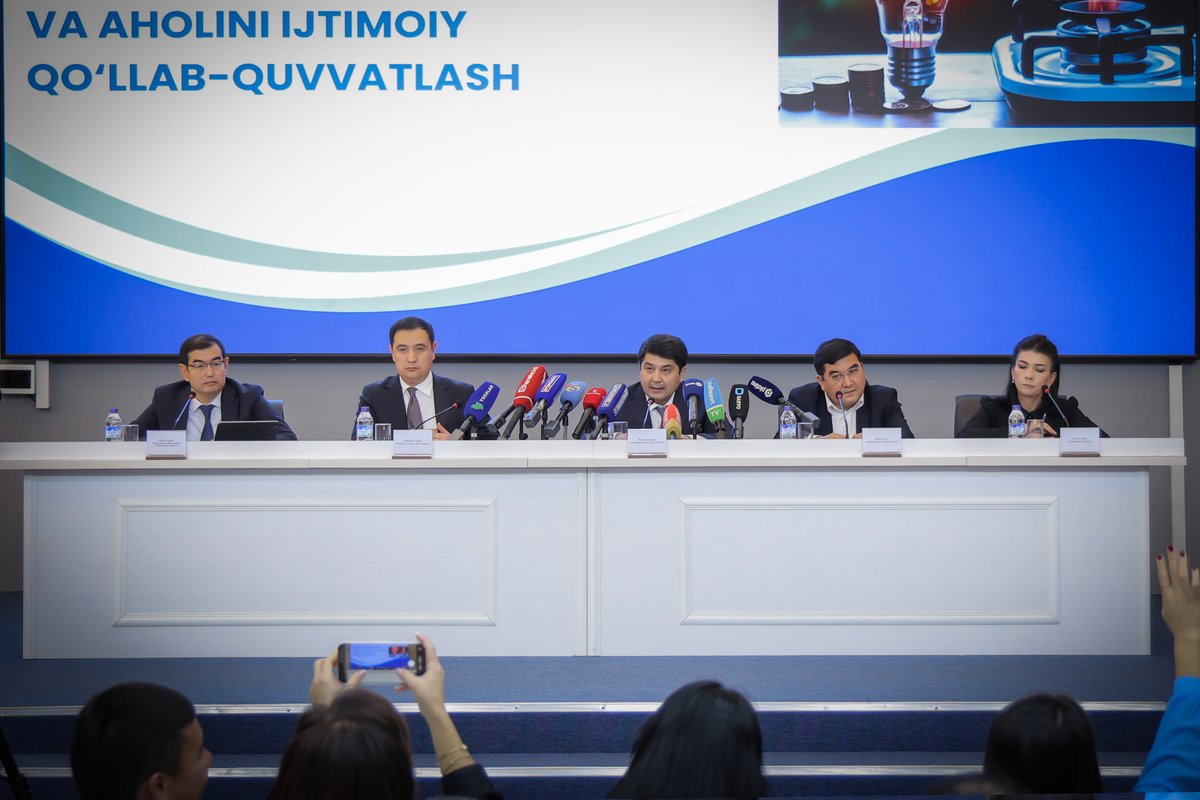
Ilhom To‘raev, chairman of the board of Issiqlik ta’minoti JSC, said at a press conference on 14 October 2026 that a long-term heat-supply strategy is being drawn up with the support of the World Bank and international consultants. The consultants have been given four or five scenarios to calculate: electrification, hybrid methods, geothermal heat and solar panels.
Mr. To‘raev was answering a question on how the heating system would cope with possible interruptions in natural gas supply. He said the company’s programmes will move to hybrid systems, which produce heat from several energy sources and fuels, from 2027. Such solutions are being considered for new residential buildings and the “New Uzbekistan” housing areas.
Possible sources he listed include natural gas, electricity, diesel units and alternative fuels, as well as solar energy, solar collectors and heat pumps.
On 24 September 2026 the Ministry of Construction and Housing and Communal Services announced that a strategy for the sustainable development of heat supply in Uzbekistan up to 2032 is being prepared with World Bank experts. Presidential resolution PP-100 of 11 March 2025 provides for moving district heating to closed systems.
Why it matters
Geothermal heat is now one of the options being costed for the long-term plans of Uzbekistan’s national heat-supply company, alongside electrification and solar energy. Earlier in October the company discussed adapting geothermal systems to Uzbek conditions with a university from Harbin.