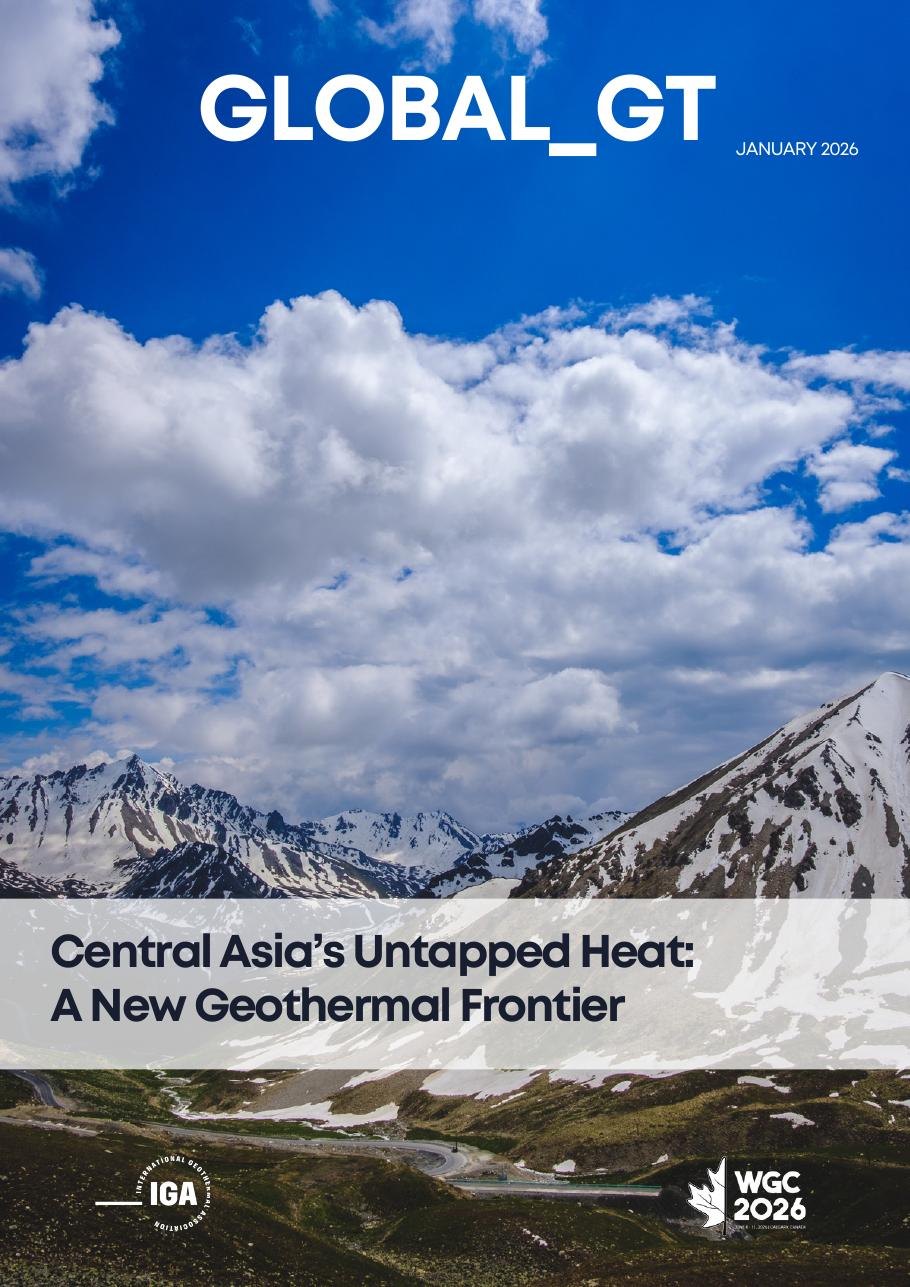
The International Geothermal Association devoted the January 2026 issue of its magazine GLOBAL_GT, released on 5 February 2026, to Central Asia under the title “Central Asia’s Untapped Heat: A New Geothermal Frontier”. Most of the issue is about Uzbekistan.
In an article titled “Why Uzbekistan Can Lead”, IGA representative Zemfira Djemileva writes that the country’s energy consumption could nearly double by 2035 and that geothermal energy offers steady heat and power regardless of weather. She sees the quickest gains in direct heat: district heating to cut natural gas use in cities, process heat for industry, and year-round greenhouse farming. Wells drilled during decades of oil and gas exploration could be reused to lower risk and cost. The IGA, which represents more than 110 countries, says it is ready to support Uzbekistan with best practice, training and technical expertise.
A second article, based on a technical analysis presented by Dave Waters, finds that areas of high heating and cooling demand overlap with sedimentary basins that have favourable geothermal conditions. In many Uzbek basins, geothermal heat is viable at moderate depths, especially with heat pumps, so drilling deeper is not always better. The article names the Amu Darya and Fergana oil and gas basins as places where existing wells could support feasibility studies and pilot projects, and links geothermal heat with saline groundwater, desalination and thermal energy storage.
A regional overview calls Uzbekistan a policy-driven frontrunner. It sees the best near-term opportunities in district heating, public infrastructure, industry and greenhouses, and says the country could set early licensing and risk-sharing rules that its neighbours could copy.
Why it matters
The world’s main geothermal association is presenting Uzbekistan to its global membership as a potential leader for geothermal energy in Central Asia, with heat for cities, industry and greenhouses as the first step.