A. T. Mukhammadiev of the Institute of Geology and Exploration of Oil and Gas Fields (IGIRNIGM) in Tashkent analyses the geothermal characteristics of groundwater in the Middle–Upper Jurassic carbonate strata of the South-Western Gissar petroleum region, which host the region’s commercial hydrocarbon deposits. The paper was posted on the website of the journal Neftegazovaya Geologiya. Teoriya i Praktika on 22 September 2025.
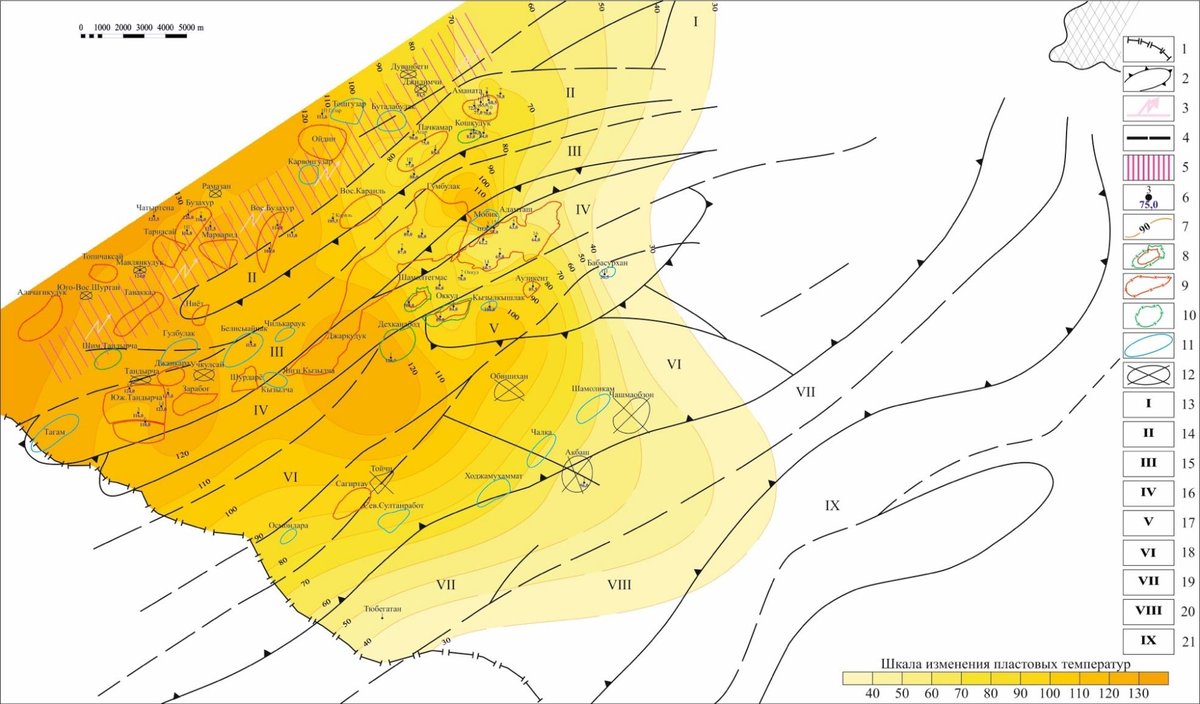
Comparing temperature, geothermal gradient and geothermal step across the Jurassic section, the study finds that these values vary widely from south-west to north-east, depending on how deeply the sedimentary cover is buried and on lithology and tectonics. The author built schematic maps of present-day temperatures for the XVa and XV horizons.
The figures come from 86 prospecting and exploration wells drilled in the region. In the Jurassic water-bearing rocks, temperatures range from 34 to 137 °C, the geothermal gradient from 1.47 to 3.85 °C per 100 m, and the geothermal step from 26 to 68 m per °C.
Why it matters
The paper was written for petroleum geology, but subsurface temperatures and gradients like these are what geothermal projects need to know first.